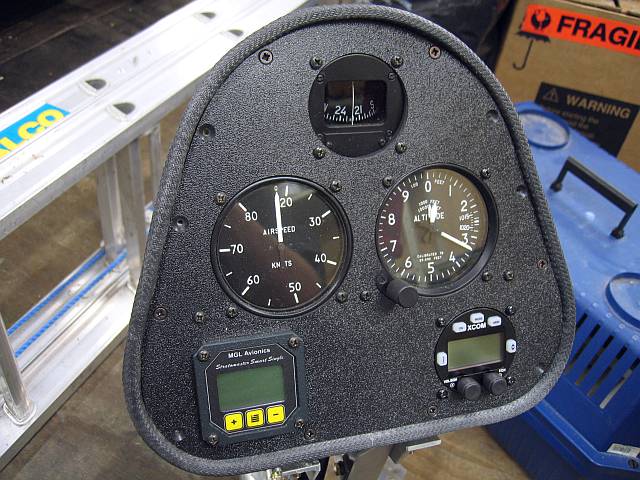
The aluminium for the rotor head cheek plates has, finally, turned up. Collected it on the way home, and ordered the radio while I was at it. Completing the retail therapy, I bought an cut-off saw which I hope will relieve some of the forthcoming drudgery.
After an hour of head-scratching and manual-reading, the saw has been exchanged for one that actually works.
Started on the cheek plates. First step, measuring the amount of travel available in the rotorhead in pitch... in this case with some strategically placed masking tape, a pencil and a protractor.
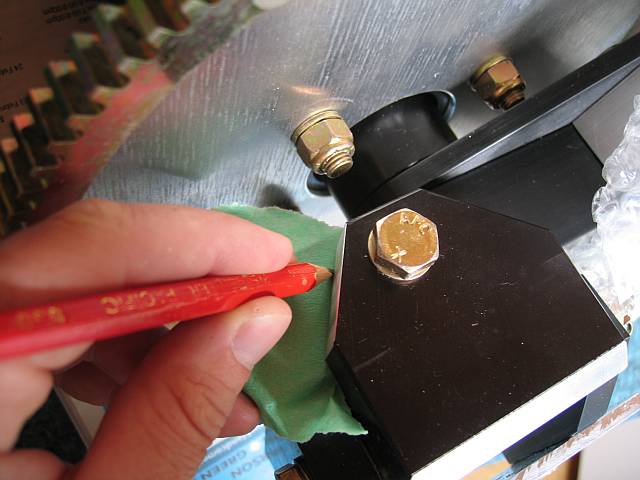
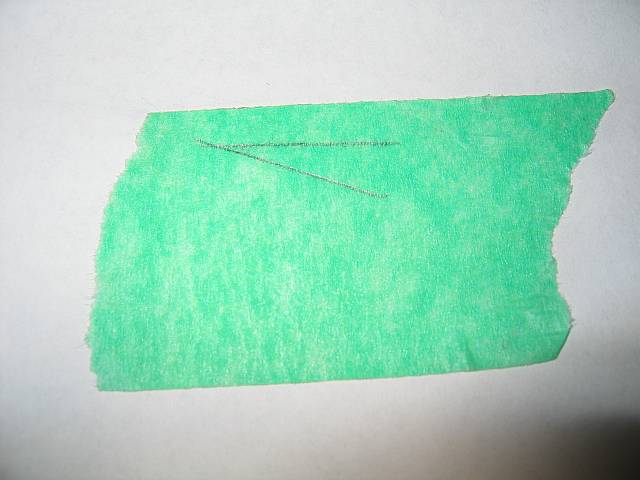
Total travel seems to be about 18°. Available travel in roll seems to be more or less unlimited.
After all the months of hacksawing, I'm kicking myself for not buying the saw sooner. The thing powers through aluminium like a hot knife through butter, and I now have myself a pair of cheek plates with very little effort indeed.
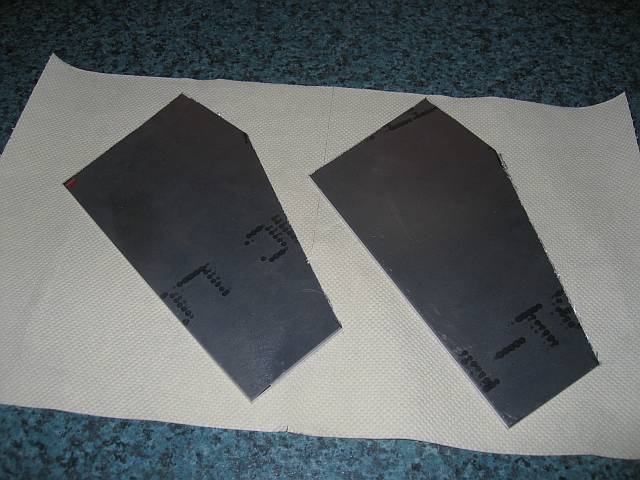
Just need to dress the edges and drill 'em.
Collected the radio.
Filed and dressed the edges of the cheek plates.
Briefly showed my nose at the flyin at Parakai today and spotted a trailer design I'm going to replicate.
Did some research around rotorhead positions and hang tests, and noticed a very wide range in head locations, depending (I assume) largely on the weight of the pilot. Since I'm considerably lighter than the design weight of 220 pounds, I think the head is going to end up much further back on the mast than anticipated. On hold.
Took the instrument panel apart to start on mounting the radio. The panel is supported at the edges, and has developed a slight sag in the middle. So I've fabricated an aluminium reinforcing brace.
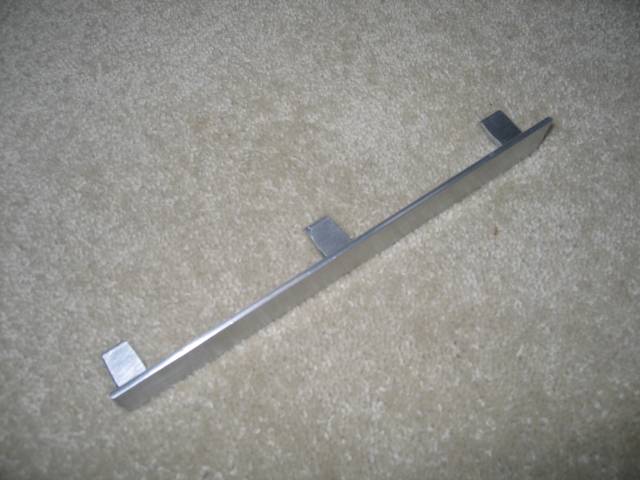
Installed the brace in the panel, and mounted the radio. Am going to have to "walk" the holes very slightly; to my infuriation the thing is a wee bit cockeyed.
Finished mounting the radio, and filed the necessary clearance into the lip of the pod. Done.